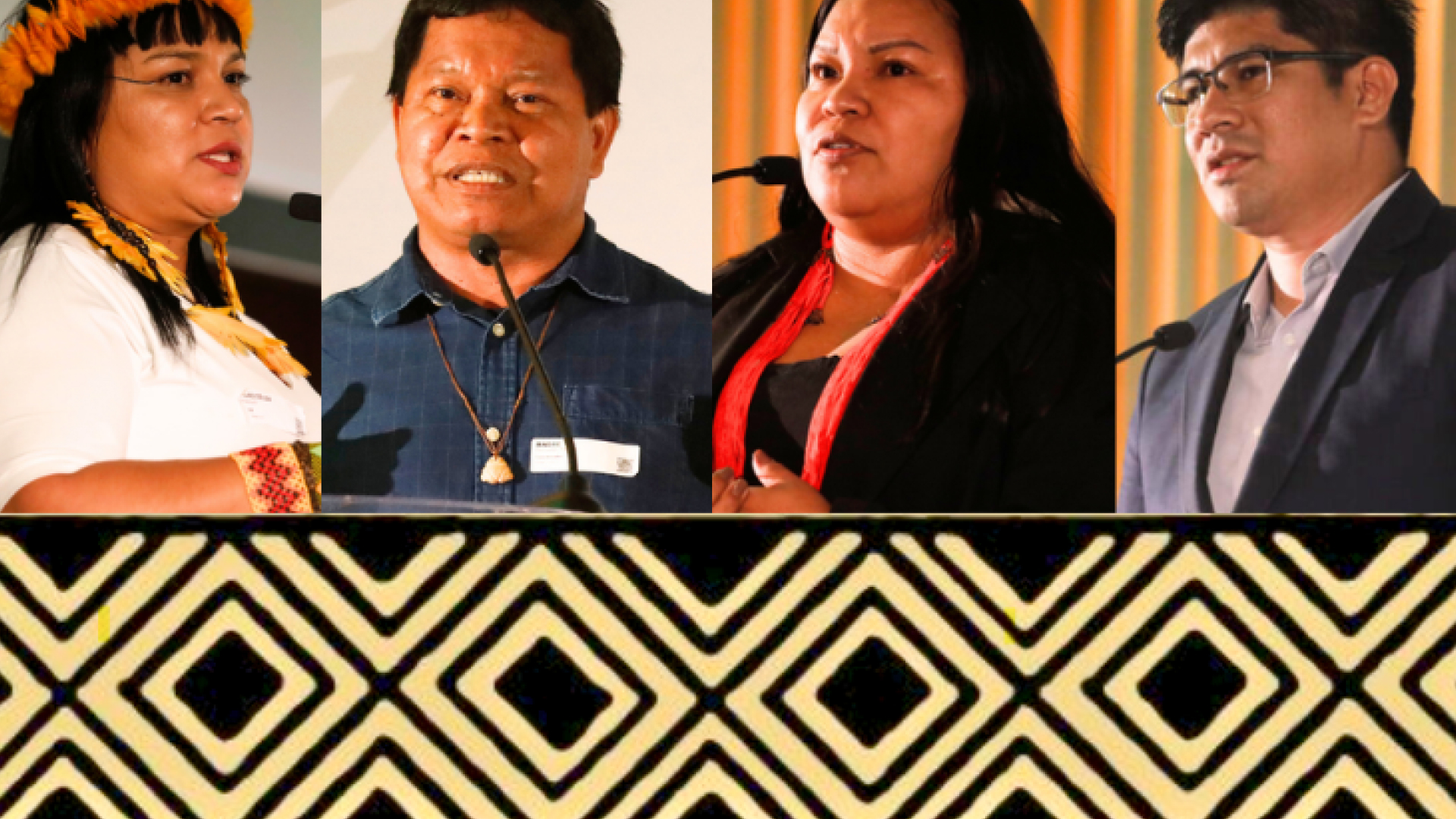
Indigenous leaders André Baniwa, Auricélia Arapium, Braulina Baniwa and Ivo Macuxi participated in the ABC 2025 Magna Meeting, bringing to light the challenges faced today by the native peoples of the Amazon, especially the socioeconomic and cultural erasure imposed by financial interests, the intensification of violence and the weakening of public protection policies.
By dedicating its 2025 Magna Meeting to the Amazon, the ABC reaffirmed the role of science in the public debate and the need to integrate, in a respectful and horizontal way, indigenous knowledge with reflections on the present and future of the region. Among the various topics addressed during the event, one axis was recurrent in different sessions: the culture, knowledge and difficulties experienced by the native peoples who have inhabited the Amazon for millennia.
The indigenous leaders were received, in a special way, by anthropologist Ruben Oliven, professor at the Federal University of Rio Grande do Sul (UFRGS) and vice-president of the ABC for the South region. Oliven pointed out that anthropology, as a field of knowledge, is crossed by a deep respect for cultures and different modes of knowledge.
According to him, the invitation to indigenous leaders involves a fundamental moral issue: “the way a country treats its minorities is a reflection of its progress.” For Oliven, “it is necessary for the minority to be able to express itself freely and develop in its own way. And today the indigenous people are actively participating in the debate – they are teachers, lawyers, have master’s and doctorates, express themselves on their own.”
He also reinforced the institutional sense of the initiative: “In this meeting we want to make it clear that ABC has the greatest interest in listening to them, not as a curiosity, but as producers of their own knowledge, as respectable as scientific knowledge. Science is one of the ways to explain reality, but there are others.” Oliven highlighted as a symbolic and political gesture the fact that the indigenous speakers began their speeches in their own languages: “It is a manifestation of friendship and cultural affirmation. The Academy welcomes them with humility and a thirst for learning.”
Trying to join efforts and think together about solutions
Also an anthropologist, André Baniwa thanked the invitation to be “in a place of thinkers, seeking to analyze history and the time we live in and build a vision of the future. In indigenous culture there is also this.” A social entrepreneur, environmentalist, indigenous human rights activist, professor, writer and politician, he articulated his speech around the recurring notion of the “end of the world”, intensified today by climate change and the refusal of a large part of humanity to change habits and values in favor of nature and its own survival.
André said he was born hearing that the world would end in the year 2000. It’s not over. What followed, however, was the condemnation of indigenous technologies as demonic, the extermination of peoples, the extinction of languages and a succession of devastating impacts on indigenous life. “There were many impacts on the lives of indigenous populations, who have endured violence and racism. We, who are here today, are remnants of these peoples,” he said.
He then posed central questions to the audience: how do discussions about climate change, rising temperatures, and uncertainties about the future affect indigenous youth? Is the end of the world approaching? Is there still hope? “What will the lives of our children, our grandchildren be like? That’s why I think we are here, to try to join efforts and think together about solutions,” he declared.
When reporting a conversation with an uncle shaman, André shared a deeply symbolic vision: when asked if the world would end, he heard the answer: “What world? The sun and moon are there, as always. The stars are in the sky. What has changed? The behavior of people, who do wrong things and are causing these climate consequences that are there. People, therefore, are the ones who will end, and not the world.”
Peoples of the Amazon have the right to live according to their values
Indigenous leader Auricélia Arapium, coordinator of the Tapajós Arapiuns Indigenous Council (CITA), works in defense of access to education and health policies, in the protection of territories, ways of life, the forest and rivers, especially facing the advance of illegal mining. In her speech, she confessed that the presentations attended at the Magna Meeting made her apprehensive. “How can we confront so many types of violations to which the peoples of the region are subjected, in order to preserve our cultures, our traditions?” he asked.
Born and raised in the state of Pará, Auricélia recalled that there are more than 180 indigenous peoples in the Amazon, with the most threatened being those in voluntary isolation. One of its main banners is the fight against Bill 191/2020, which allows mining on indigenous lands. She reported that, in the week before the event, indigenous peoples occupied the Secretariat of the Environment of Pará after the government renewed the contract of a mining company within indigenous territory.
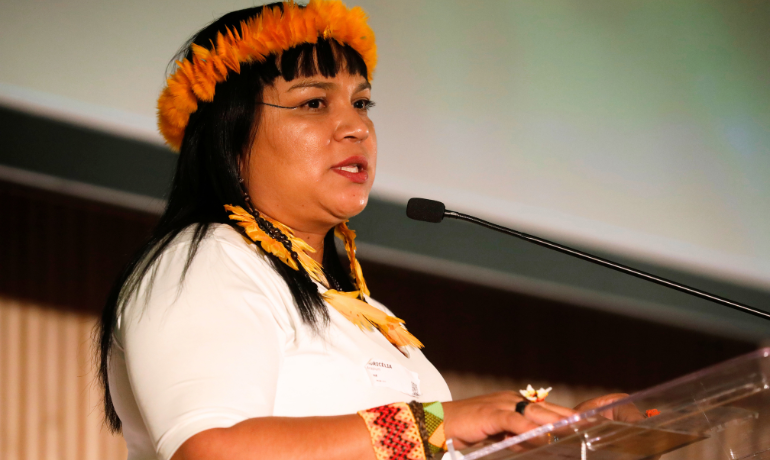
According to Auricélia, mining is not restricted to the south of the state: “it has already mapped the whole of Pará”. In the western region, in Oriximiná, the MRN company advances on quilombola territories and threatens indigenous peoples in recent contact, such as the Zo’é. There are also pressures associated with forest management plans. “We had two indigenous lands in the Lower Tapajós with a declaratory ordinance recently, and this generated a great conflict due to the interest of mining in these lands.”
She pointed out that mega infrastructure projects amplify social problems: roads that cut through the forest also facilitate access to alcohol, drugs and organized crime. “The entire Amazon is compromised, including indigenous territories, with criminal networks such as the PCC and the Red Command. These networks seek to recruit leaders among indigenous youth. When they can’t recruit, they kill.”
Violence, the State and the fragility of institutional protection
For Ivo Macuxi, an indigenous lawyer and president of the OAB-RR indigenous defense commission, the most worrying aspect is the capture of the structures of the State itself by organized crime. “Pará has been a classic example: local governments change their own legislation to meet the interests of groups.”
Auricélia added that factions use villages as hiding places and drug warehouses, dramatically aggravating alcoholism in communities near the roads. “It’s not cachaça: the relatives consume pure alcohol, mix it with water and drink it. When they don’t have it, they drink gasoline. They poison themselves. And even with many complaints, this is made invisible.”
Ivo Macuxi warned of legislative initiatives that further weaken territorial rights, such as Law 14.701, which institutes the time frame. “It is a measure that weakens the protection of indigenous territories and their leaders,” he said.
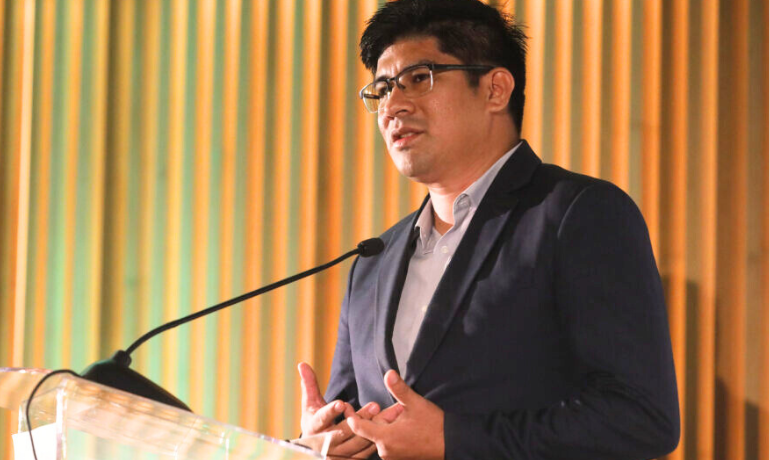
He quoted Academic Eduardo Góes Neves, from the University of São Paulo (USP): “Indigenous peoples do not only inhabit the forest: they built it. They are forest scientists. Guardians of ancestral technologies. They know the soil, the rainfall cycles, the properties of the plants.”
According to an April 2024 UN report, released in 2025, although they represent only 6% of the world’s population, indigenous peoples protect 80% of the remaining biodiversity. “We continue to contribute with our technologies, our sciences, our knowledge — not only for us, but for all of humanity,” said Ivo.
For Ivo, inviting indigenous leaders to express themselves is more than listening: it is recognition and collective responsibility between indigenous science and non-indigenous science. “There is no future for the Amazon without its peoples and there is no future for science that ignores the diversity of knowledge. This is a call to action.”
The guardians of the forest
Anthropologist Braulina Baniwa , a specialist in gender and indigenous peoples, criticized the way indigenous knowledge is treated in a “niche” way in academia. According to her, there is a systematic refusal to call this knowledge science, preferring terms such as “epistemologies” or “worldviews”, just as indigenous languages are often reduced to the category of “dialects”. “These are violence against our culture,” he reflected.
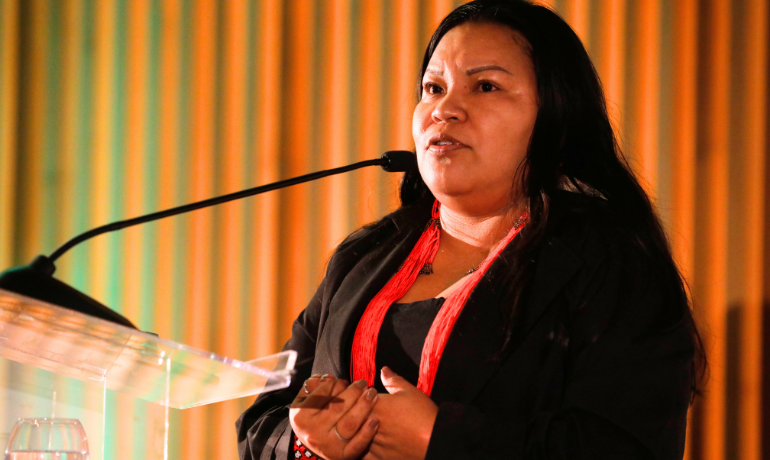
She stressed that violence is the most recurrent form of relationship between the surrounding society and traditional peoples, but it affects its members unequally . When mining or illegal logging invades indigenous lands, it is women who suffer the most serious violations, even if their suffering remains invisible.
“Women are the guardians of the forest, holders of an ancient science of management, restoration and care. We need to take care of those who take care of the Amazon, humanize this relationship,” she said, highlighting the role of indigenous community funds in financing bioeconomic activities led by women.
Clash of worlds and paths of dialogue
For Ivo Macuxi, it is precisely in the clash between worlds, cultures and sciences that the possibility of building a real dialogue opens up. “How can we dialogue in the protection of the Amazon and the peoples who have inhabited it for millennia?” he asked.
This dialogue, however, takes place on a stage marked by pain. According to the Global Witness 2022 report, every two days an environmental defender is murdered in the world, almost half of whom are indigenous or Afro-descendant. “They defend the territory not only physically, but spiritually, often with their own lives,” he noted.
Ancestry older than previously assumed
Driven by new technologies, Amazonian archaeology has revealed a constellation of ancient settlements much larger than previously imagined, connected by road networks. Academic Eduardo Góes Neves recalled that these discoveries confirm the reports of Friar Gaspar de Carvajal, who in 1542 described large cities on the banks of the Amazon.
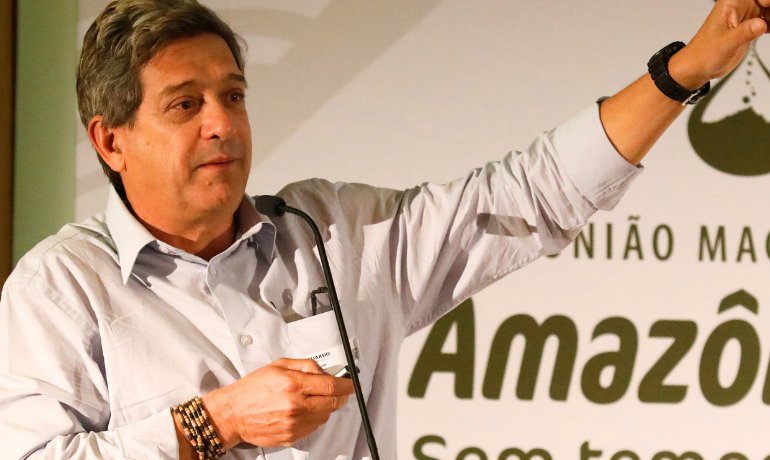
In these archaeological sites, the presence of terra preta, a soil rich in carbon and nutrients produced by indigenous management, evidences a sofiFOT 4sticada ancestral biotechnology. For Neves, this is an emblematic example of the need to articulate traditional knowledge and modern science. The genetic data indicate continuity between ancient and current indigenous peoples, reinforcing the need to abandon the term “prehistory” and think about Brazil from an ancient history, deeply rooted in the Amazon and its native peoples.