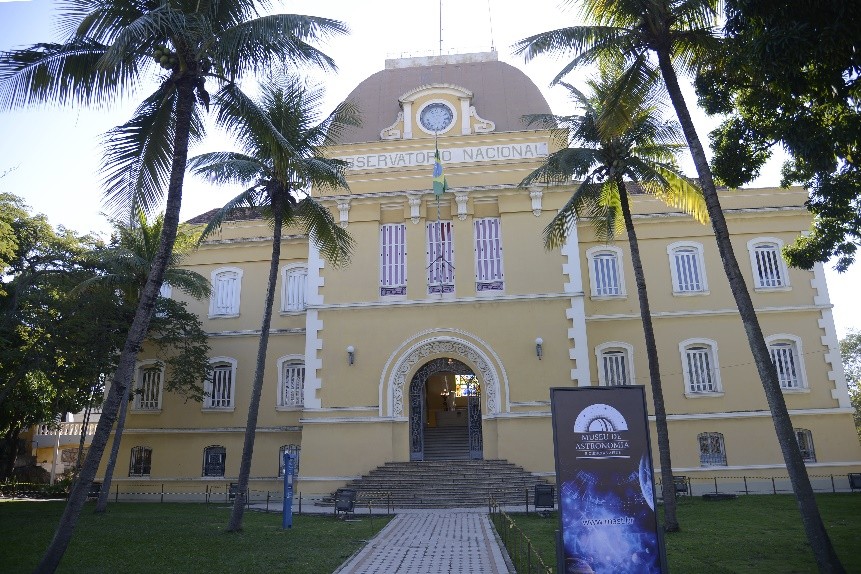
The Brazilian Academy of Sciences (ABC) and the Museum of Astronomy and Related Sciences (MAST) are working together on the creation of the ABC José Murilo de Carvalho Historical Memory Center. The objective is to make the documentation related to the first 100 years of the Academy available digitally, as well as to store the physical collection on the premises of ABC and MAST.
MAST already takes care of the collections of important institutions of Brazilian science, such as the National Council for Scientific and Technological Development (CNPq) and the National Observatory (ON), and also keeps the personal collections of great Brazilian scientists, among which are twenty members of the ABC. They are:
Alexandre Girotto, Allyrio Hugueney de Mattos, Manuel Amoroso Costa, Bernard Gross, Diógenes Almeida Campos, Elisa Frota-Pessoa, Fernando de Souza Barros, George Bemsky, Henrique Morize, Hervásio de Carvalho, José Israel Vargas, Jayme Tiomno, João Christovão Cardoso, Joaquim da Costa Ribeiro, Jorge Manuel Sotomayor, Lélio Gama, Leopoldo Nachbin, Luiz Pinguelli Rosa, Maria Laura Leite Lopes and Mauricio Peixoto.
The project
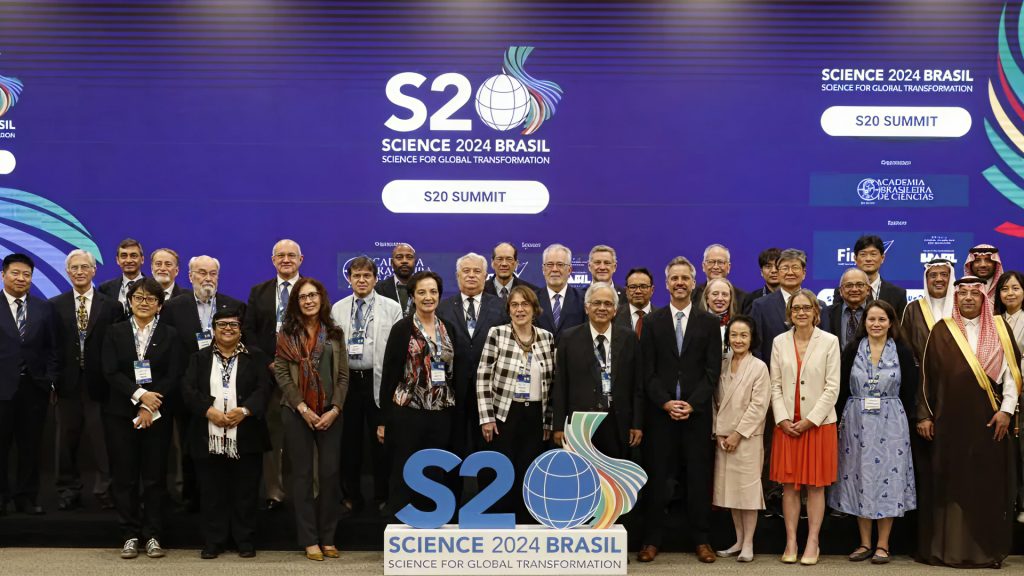
The signing of the Protocol of Intent between ABC and MAST for the execution of the project took place during the 2024 ABC Magna Meeting, and, on January 7, 2026, the two institutions signed a cooperation agreement for the next three years. The objective is to collaborate in research, extension, dissemination and preservation activities of scientific collections.
The Rio de Janeiro Research Support Foundation (Faperj) financed the first phase of the project, coordinated by ABC Director Patrícia Bozza. This phase had the participation of the following academics and researchers from the state of Rio de Janeiro: Diógenes de Almeida Campos, Débora Fogel, Ildeu de Castro Moreira, Maria D. Vargas, Paulo Cruz Terra, Rodrigo Toniol and Thaiane Moreira de Oliveira. The work sought to organize and digitize a part of the Historical Collection, composed of documents in various formats produced since 1916.
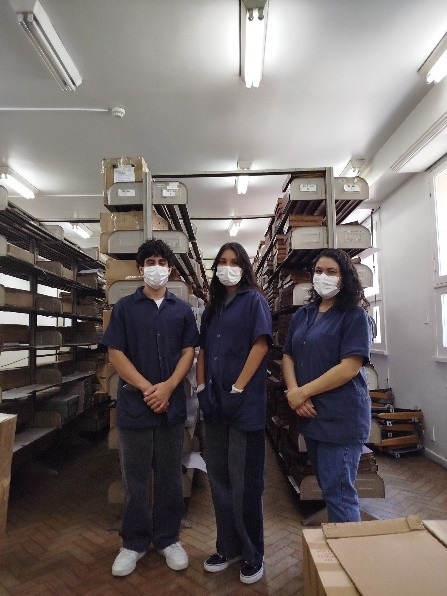
The first stage involved activities related to the cleaning, recovery and identification of items that were in the ABC library, on Rua Araújo Porto Alegre, in downtown Rio de Janeiro. In this work, historians and archivists worked based on the guidelines of the Laboratory for the Conservation and Restoration of Paper Documents (Lapel/MAST). Then, the documents were digitized and are being organized in an inventory, which will allow researchers to make structured searches among the more than 70 thousand images captured.
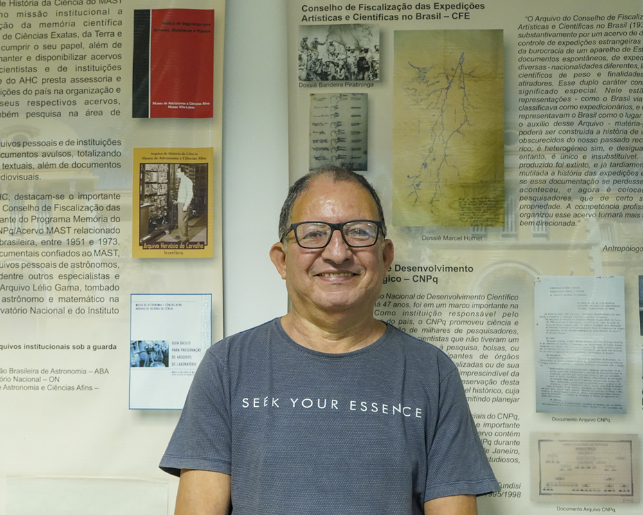
“It is the largest collection that we will have here at MAST”, stressed the head of the History of Science Archive of MAST, Everaldo Pereira Frade. “When the collection goes live, I am sure that it will be widely accessed, becoming a window into the history of ABC, its academics and Brazilian scientific policy.”
Organization of the Collection
At this first moment, the collection will be divided into three large groups:
Minutes and Bylaws – Chronological compilation of all minutes of meetings and statutory changes found in the Historical Collection. These minutes record, among others, information on decision-making and activities within the Academy; meetings between representatives of the ABC and the government, as well as national and foreign scientific institutions; debates on the role of the ABC in the Brazilian political context; internal disputes in the scientific community and clashes between different worldviews and development.
Scholars’ Dossiers – This section contains various documents relating to the admission of scholars, general information about members, as well as correspondence exchanged with the Academy’s administration, the organization and participation in events, and general contributions to the work of the ABC. Some dossiers also have newspaper clippings and other participations in the media and public debate.
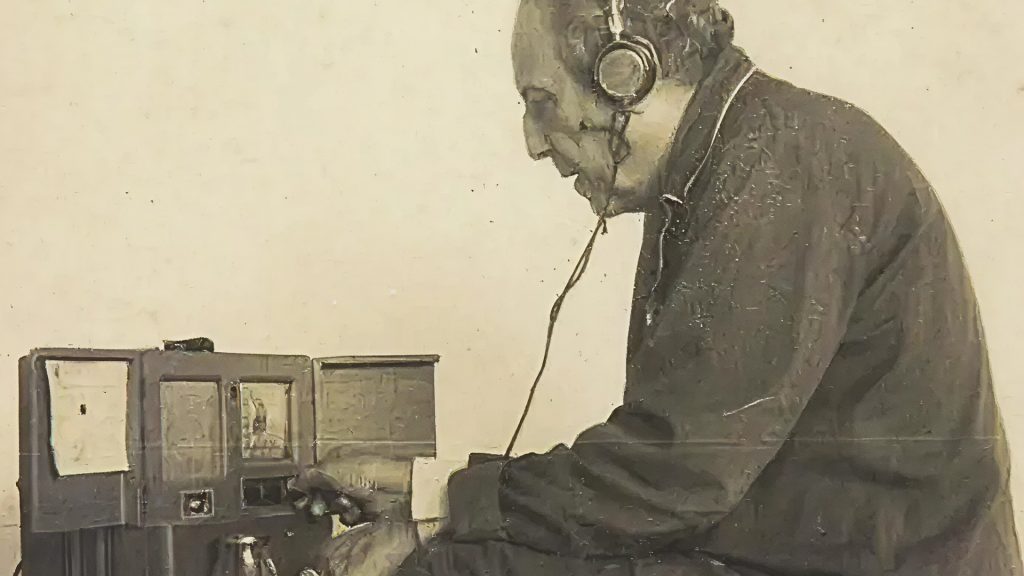
Photos and Reproductions – The iconographic collection is composed of photographs that portray the activity of ABC and its academics, in events of the Academy itself or of other institutions that kindly provided reproductions. Among the records are images of scientific expeditions; historical visits by prominent scientists, such as Albert Einstein and Marie Curie, and visits by authorities such as former presidents Itamar Franco, Fernando Henrique Cardoso and Dilma Roussef.
Content and plans for the future
Historian Dayane Ponciano Lima, who holds a master’s degree in preservation of S&T collections from MAST, worked on the process of identifying, organizing, and digitizing the documents. She highlights some of the features that caught her eye.
“In the first decades we found many discussions about the need for a national academy; about what is developed by Brazilian science and the exchange with other countries. Until the 1960s, we see a leading role for the Academy in the search for funding for projects and expeditions, and this perhaps reflects a period in which the funding agencies were still less structured. Another important characteristic was the role of intermediary that the ABC played between the Brazilian and international scientific communities, such as in the search for articles or collaborations. Today, with the internet, this connection has become much easier, but it was not always like this”, reports the historian. “We also realize that the criticism of the lack of incentive and scientific funding is perennial.”
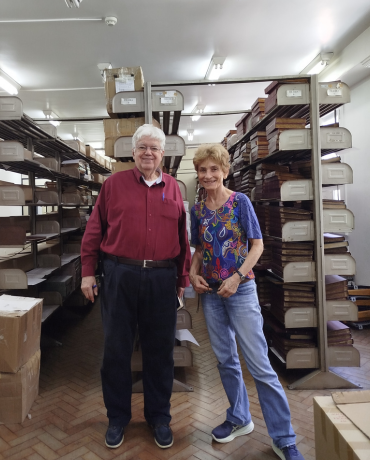
Also participating in this stage of the project, under the supervision of the MAST technical team, were the technicians Mariana Frade de Lima, Gabriely Santos da Silva Ferreira, Tainá de Lemos, Eliza Costa de Souza and Elisa Ribeiro, and the document conservator and restorer Janaina Magalhães Angelo.
Academic Maria D. Vargas explains that the material contemplated in this first stage corresponds to just over a third of the total collection.
“We had limited knowledge about the material when we started, and we ended up discovering a lot more than we had anticipated. For this reason, we are already preparing a second phase of the project. At this stage, we intend to organize and digitize more than 240 thousand pages. This collection includes all correspondence issued and received since 1929, valuable documentation related to agreements, academic exchanges, and partnerships with scientific institutions, documents on awards and honors that the Academy has already granted, as well as those related to negotiations for the ABC to have a headquarters consistent with its relevance. We are also planning to digitize and make accessible all articles in the Annals of the ABC published between 1929 and 1999, as well as all Academy publications throughout that period. We will also transcribe the precious audio and video files that have already been mastered in the first stage of the project, for virtual availability in PDF”, anticipates the professor.
The team involved in the ABC memory project
Research potential
As part of its commitment to Brazilian research, ABC believes that the collection will be invaluable to the field of study in the History of Science in Brazil. Once online, researchers will only need to register in the MAST database and will be able to access all the documents in the collection.
Two examples illustrate well the research potential of the collection. Historian Paulo Cruz Terra, an affiliate member of ABC 2023-2027 and a specialist in the field of labor history, has an ongoing project that includes technological initiation students (PIBITI-UFF) Clara Reis and Leonardo Martins, whose scholarships are paid by ABC through an agreement with the Fluminense Federal University (UFF).
The team delved into ABC’s financial documents and selected those with historical value for digitization. Among the numerous invoices and purchase justifications, the young people found documents and notebooks that shed light on how the ideas in circulation in the scientific environment have evolved over the years.
“The documents found in the ABC archives open up many research possibilities for the field of the history of science in Brazil. In financial documents, in the categories ‘ledger’ and ‘accountability’, for example, we can use methodologies from the field of economic history in order to enumerate the various activities carried out, tracing, over the years, the origin of public funding received since the 1960s. Other documents reconstruct the daily lives of ABC employees, as they appear on the ‘payrolls’ and on the ‘time sheets’, and can help us reconstruct a social history of the work of science in Brazil through subjects other than scientists”, explains Leonardo.
The merit of the work earned Clara Reis second place in the category “Human, Social, Linguistic, Letters and Arts Sciences” of the Innovation Initiation Award of the UFF-2025 Academic Agenda. “It was an extremely important work for my training in History. At first it was very difficult to reconcile with my academic life, but I ended up getting used to it and taking a liking to the internship and the people”, said Clara.
Another example is that of researcher Thammy Guimarães Costa Borges, a doctoral student in the Global Academies project, of the European Research Council (ECR), which investigates the role of scientific societies in the globalization of knowledge in the 20th century. Her research addresses gender and political relations within the Brazilian Academy of Sciences and the diverse ways in which women claim their space in scientific environments.
“The intention of my work, as a cultural historian, is to understand the mechanisms behind the barriers to female participation in Brazilian and world science. This means going beyond statistics, understanding that the processes of nomination, election, selection and participation within the Academy are not neutral, but are the result of sociocultural practices”, he explains. “In addition, the 20th century was a period of intense political upheaval in Brazil, so I investigate strategies used by the ABC to maintain its autonomy during the Estado Novo and the Military Dictatorship.”
“To understand these dynamics, consulting the collection is indispensable. I reached him through MAST, which communicated to me about the partnership. Everaldo introduced me to Dr. Maria Vargas who received me with enthusiasm. Later, I was also received by President Helena Nader. I arrived at the ideal time, because without cataloguing the collection, my research would be impossible. The existence of a well-preserved and organized archive saves the historian time and is important to make the history of Brazilian science accessible”, he adds.