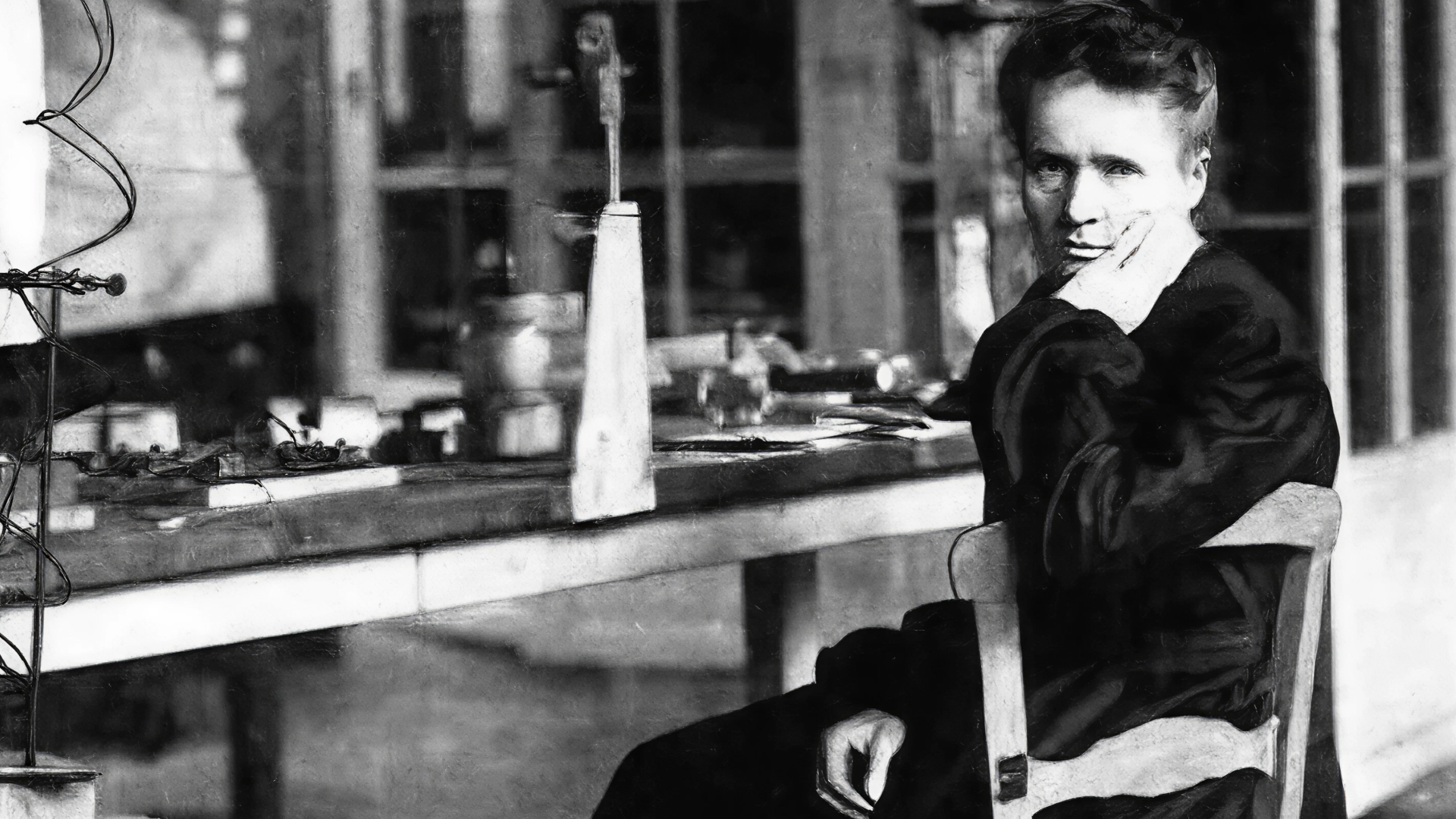
Between July 15 and August 28, 1926, Marie Skłodowska-Curie was in Brazil accompanied by her daughter Irène Curie, on a scientific tour that mobilized the academic community and aroused wide public attention. At the time, Curie was 59 years old and had already been awarded two Nobel Prizes – Physics (1903) and Chemistry (1911) – a condition that gave the visit a singular meaning in the process of consolidating Brazilian scientific institutions.
The scientist was in Rio de Janeiro, São Paulo and Minas Gerais, participating in conferences, academic meetings and visits to scientific and medical institutions.
- Conferences, displacements and public repercussion
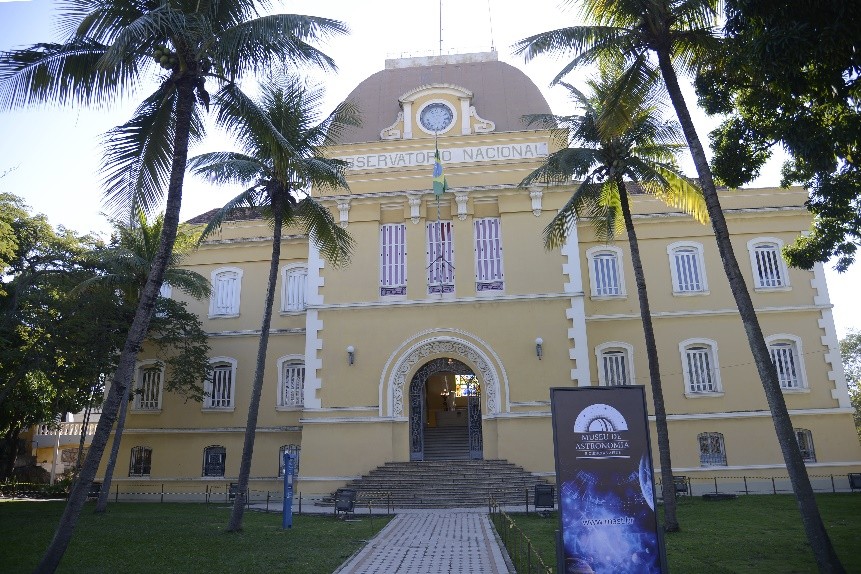
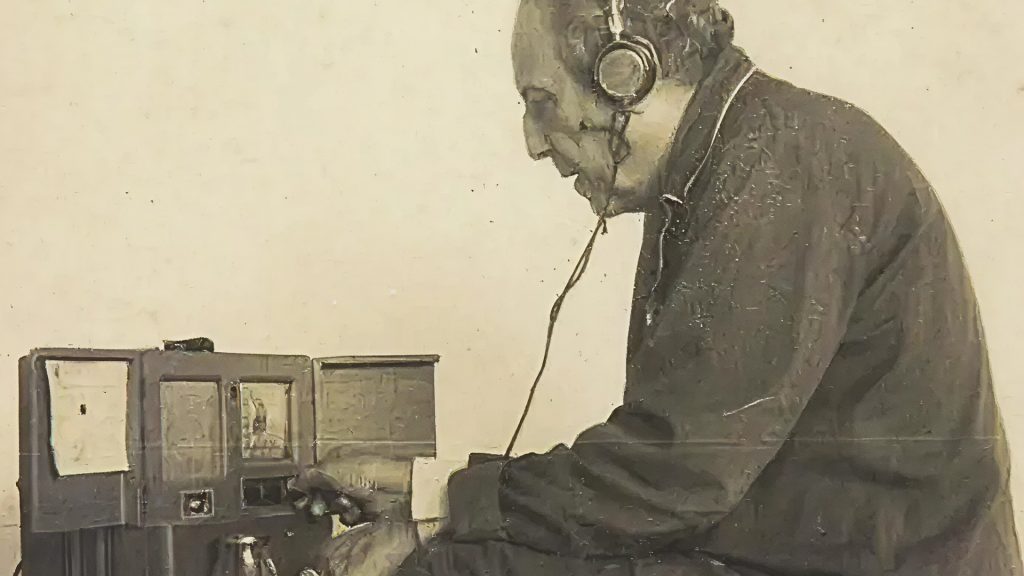
In Rio de Janeiro, Marie Curie gave a series of conferences on radioactivity at the Polytechnic School, which attracted a large audience and extrapolated the academic world. One of the lectures was broadcast by Radio Society of Rio de Janeiro, a pioneering initiative of Brazilian broadcasting with historical links with the scientific community and with ABC itself. At the same time, Curie visited cultural and scientific institutions, such as the National Museum, as well as tourist attractions – such as Corcovado and Sugar Loaf, where there was already a cable car – and cities in the surroundings of Rio de Janeiro, such as Petrópolis, Vassouras and Barra do Piraí.
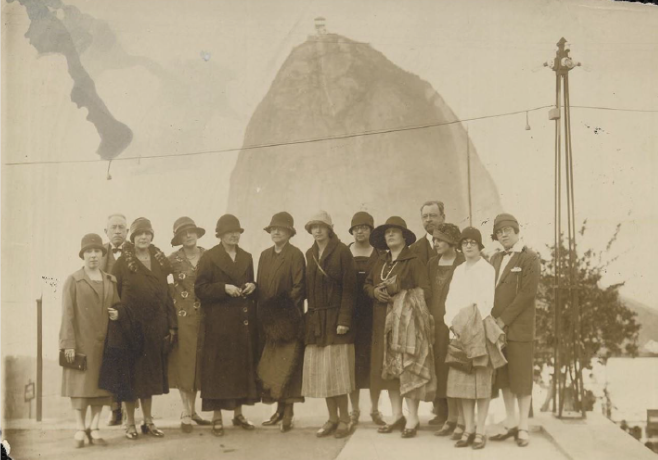
“The eminent scientist Mmme. Curie and her illustrious daughter in Urca, in front of the majestic cliff of the ‘Pão de Assucar’, in the company of Drs. Augusto Ramos and Miranda Jordão, from the Caminho Aéreo Company, and the Commission of Ladies of the Brazilian Federation for Women’s Progress. From left to right, Mrs. Nininha Bastos, mme. Hazard, Mrs. Stella Duval, Mrs. Curie, Mrs. Jeronyma Mesquita. Mlle. Irene Curie, Dr. Carlota P. de Queiroz, Mrs. Esther Pego R. William, Mrs. Bertha Lutz, Mrs. Maria Pereira de Queiroz and Mrs. Maria dos Reis Santos”
The program continued to São Paulo, where the scientist gave a conference at the School of Medicine and visited research institutions, including the Butantan Institute. Next, he visited the Águas de Lindóia station and the Alto da Serra Biological Station.
In Minas Gerais, the agenda gained special prominence by articulating science, medicine and intellectual training. At the Faculty of Medicine of Belo Horizonte, a lecture on radioactivity and its applications brought together young students who would later become central names in Brazilian intellectual and political life, such as Juscelino Kubitschek, Guimarães Rosa and Pedro Nava.
- ABC as a space for scientific exchange and recognition
On August 24, 1926, Marie Curie held, in a Solemn Session at the headquarters of the Brazilian Academy of Sciences, the unprecedented scientific communication entitled “The invariability of radioactive constants”. At the time, the president of ABC, Henrique Morize, was not in the country, and was represented in greeting from Academic Juliano Moreira, who would take over as the next president that same year. Next, she was honored with a speech by the vice president of ABC, Miguel Osório de Almeida.
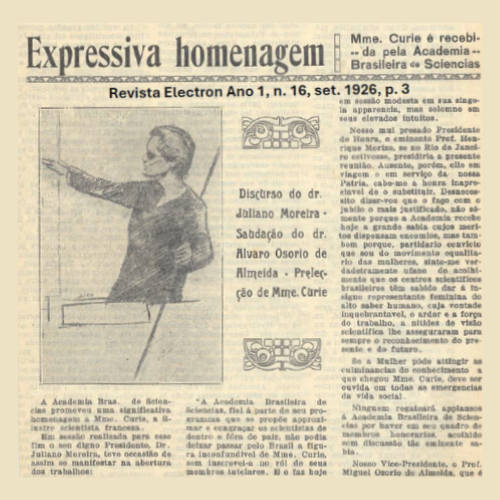
Article about the Solemn Session with a lecture by Marie Curie at the Brazilian Academy of Sciences published in the magazine Eléctron
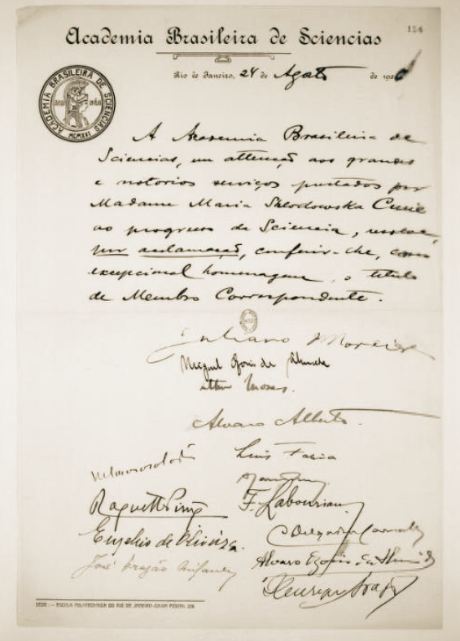
Title of Corresponding Member of the Brazilian Academy of Sciences given to Marie Curie
In contrast to the European context, in which Curie faced resistance for being a woman and was not accepted into the French Academy of Sciences, her reception in Brazil included the formal recognition of her excellence as a scientist by the Brazilian Academy of Sciences, which admitted her by acclamation, at the time, as a corresponding member, having been the first woman to join the ABC staff. It is a milestone in the history of the Academy and a significant record of the female presence in institutionalized science at the beginning of the twentieth century.
- Science, medicine and the promotion of radiotherapy in the country
Marie Curie’s visit to Brazil had concrete impacts on the field of medicine. In Belo Horizonte, the scientist visited the Radium Institute, then the main Brazilian center dedicated to cancer treatment. In that context, radiotherapy was still incipient, and one of the methods used was Curie therapy, based on the use of needles containing radium for the treatment of tumors.
According to records at the time, Curie would have donated two radio needles to the Institute, a gesture that became a symbol of the transfer of knowledge and technology and contributed to the consolidation of radiotherapy in the country. More than the material value, the visit reinforced the circulation of scientific ideas associated with basic research and the medical applications of radioactivity, widely publicized by the national press.
For the ABC, this public repercussion also had an institutional effect: by integrating the visitor’s scientific itinerary and hosting its communication, the Academy increased its visibility and consolidated its authority as a national scientific reference.
- Women, science and institutional memory
Marie Curie’s visit also took on a catalytic role in debates on gender and science. By circulating through academic, medical and institutional spaces, accompanied by the Brazilian zoologist Bertha Lutz, daughter of doctor Adolfo Lutz, a graduate of the Sorbonne and a pioneer of the feminist movement in Brazil, Curie symbolized the female presence in a historically masculine field and especially marked by the exclusion of women. The recognition received in Brazil contrasts with the barriers faced by her in European institutions and reinforces the historical value of this episode for the national scientific memory.
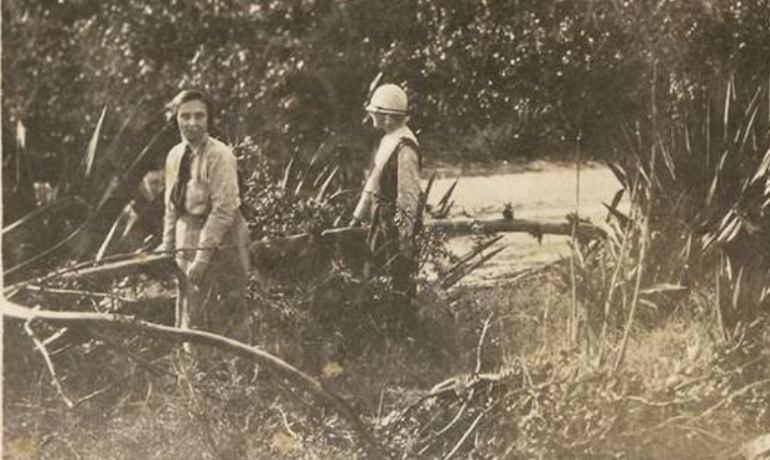
FBertha Lutz and Marie Curie strolling in Sepetiba
By preserving and disseminating the memory of this meeting, ABC reaffirms its historical commitment to science, education, inclusion at all levels and international dialogue, transforming the past into a living reference for the present and future of science in Brazil.
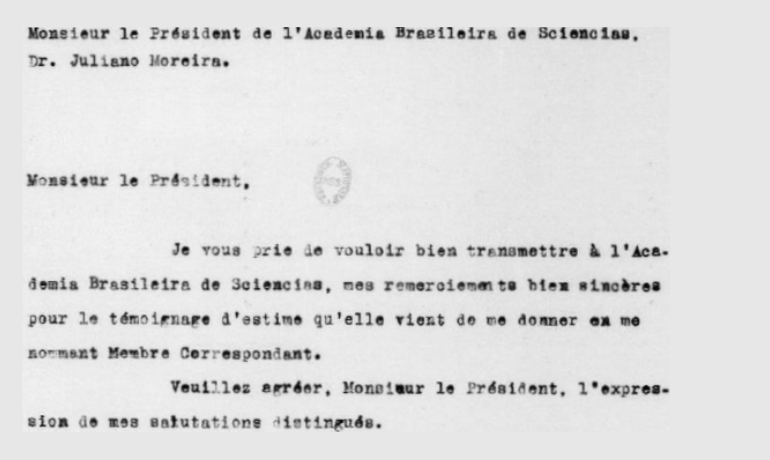
Marie Curie’s acknowledgment to the Brazilian Academy of Sciences
(GCOM ABC)
References:
Image and data research by Academic Ildeu Moreira, sent to ABC on 12/31/2025
Rossini, Maria Clara. On a visit to Brazil, Marie Curie inspired the beginning of radiotherapy in the country. Superinteressante, 28/03/2022
Bernardo, André. The visit to Brazil of Marie Curie, the only woman to win the Nobel Prize twice. BBC News, 03/01/2024