More than a hundred years ago, on April 20, 1923, a group of scientists and professors created the Radio Society of Rio de Janeiro (RS). A pioneer here, it was not born by state initiative or as a private company, but as a civil entity, a society maintained by its partners and sustained by the voluntary work of many. It was an innovative initiative with a great impact in Brazil at the time.
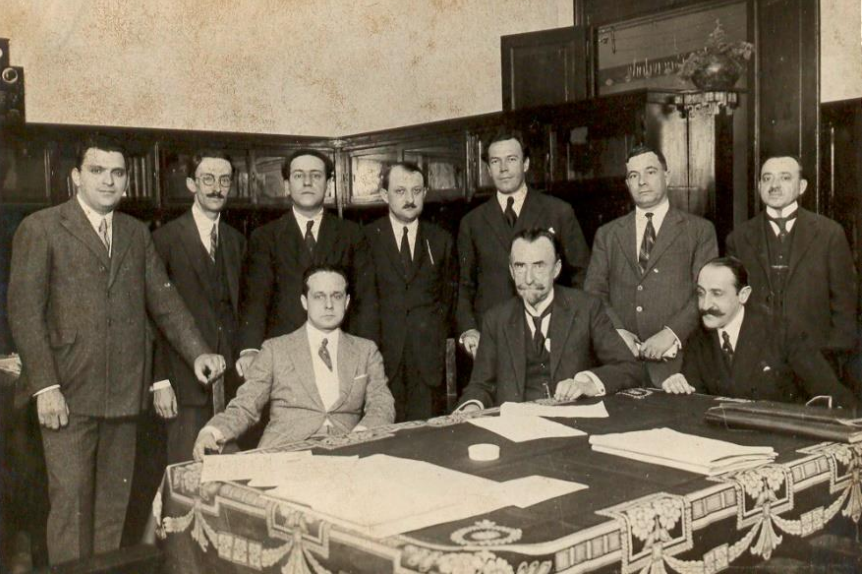
Its Statute clearly defined the purpose of the station:
“Founded exclusively for scientific, technical, artistic purposes and pure popular education, it will never be involved in any matter of a professional, industrial, commercial or political nature.”
In 1936, Radio Society was donated to the “Brazilian people”, passing to the administration of the State, through the federal government, becoming Radio MEC, which built a centennial history of contributions to Brazilian culture and education.
- Edgar Roquette-Pinto and the Brazilian Academy of Sciences
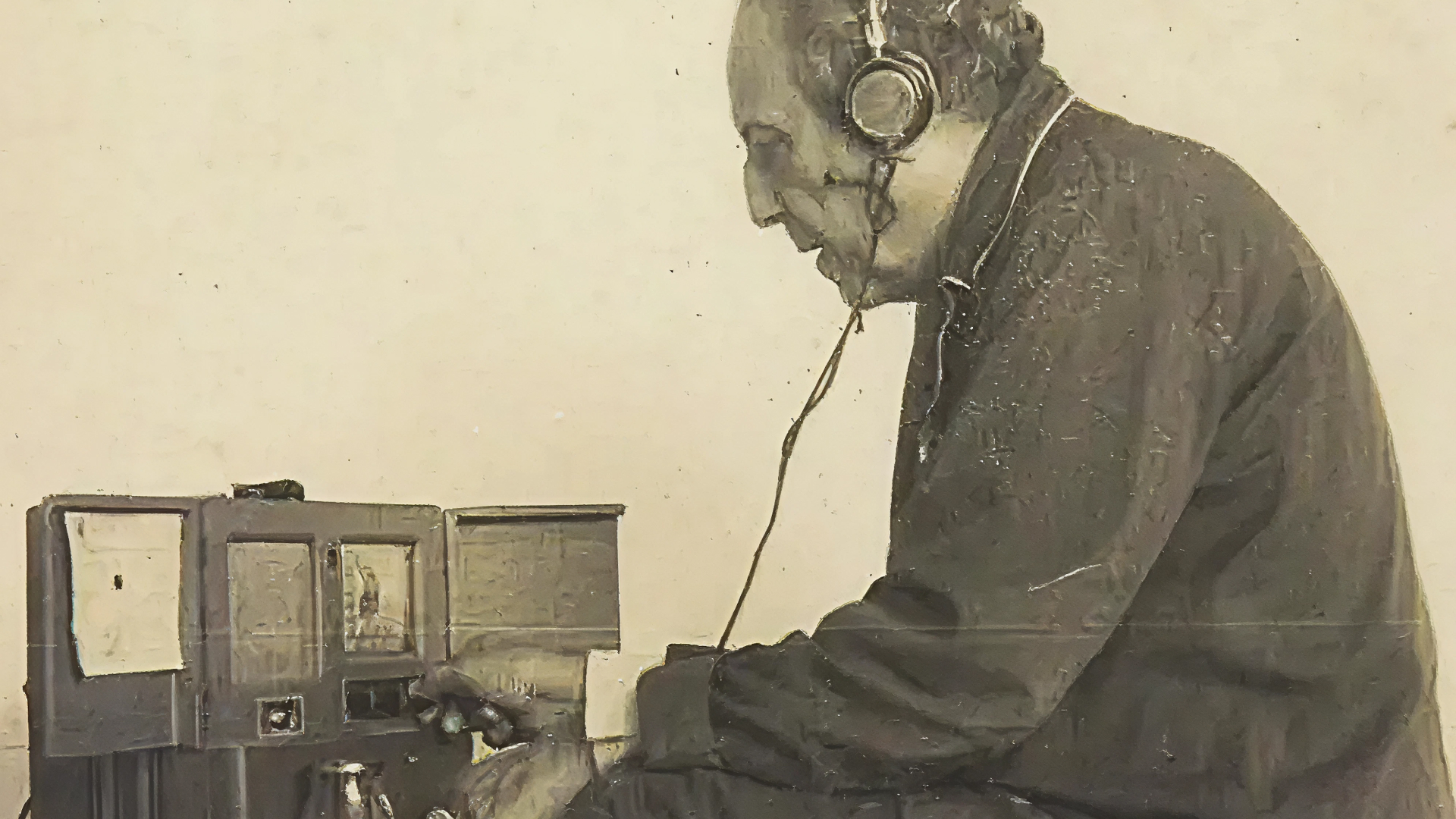
The great engine behind the creation of Radio Society was Edgar Roquette-Pinto (1884–1954), a physician, anthropologist, educator and communications enthusiast in Brazil. In 1923, Roquette-Pinto mobilized his colleagues from the Brazilian Academy of Sciences (ABC), created seven years earlier, of which he was secretary-general.

He especially had the support of Henrique Morize, then president of ABC, who also assumed the presidency of Rádio Sociedade. The initial financing for the acquisition of the equipment came from businessmen such as Demócrito Seabra (treasurer of RS) and Carlos Guinle. With the subscription of a significant number of members and the sponsorship of a few companies, it was possible to maintain the radio for 13 years, preserving its educational and non-commercial character.
- The struggle for radiotelephony and the technical challenges
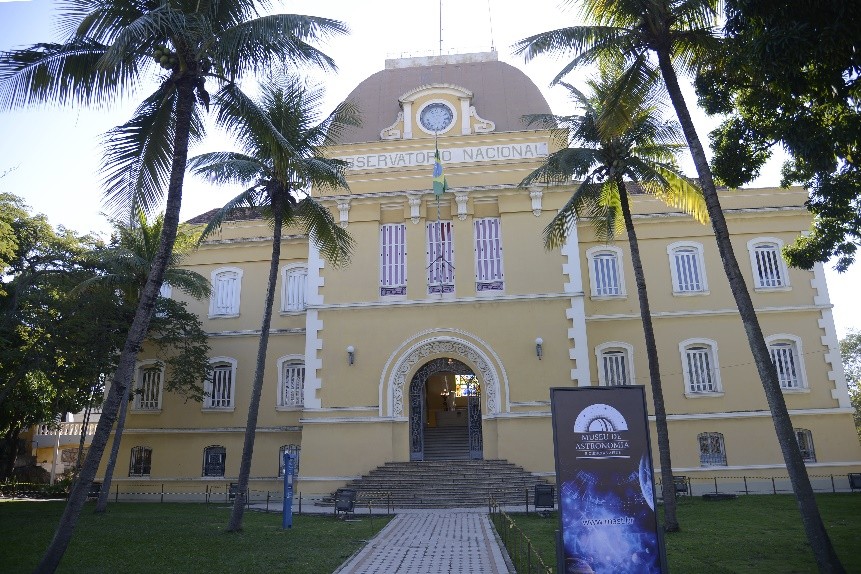
Between 1924 and 1928, Radio Society and ABC occupied the Czechoslovak Pavilion, built for the Centenary of Independence, on Avenida das Nações. After the demolition of the building, Rádio Sociedade moved to Rua da Carioca, while ABC remained without a fixed headquarters for many years.
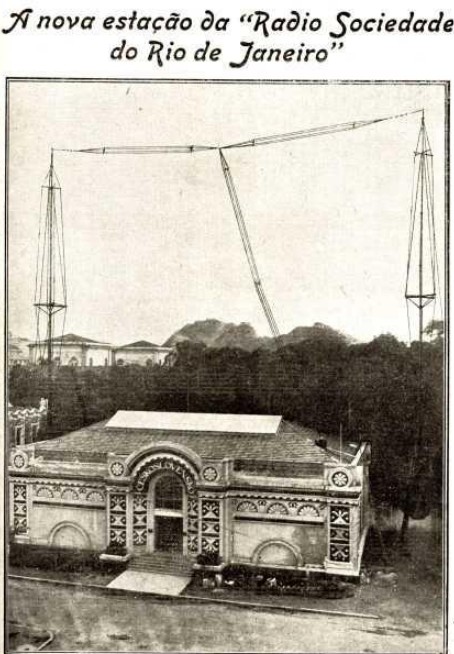
In the early years, ABC and Rádio Sociedade led a successful struggle with the federal government for the liberation of the use of “wireless telephony” (TSF) or radiotelephony, as radio transmission was then called. They contributed to putting an end to the anachronistic requirement of a license for the installation of receivers.
The technical difficulties were many. The technology was cutting-edge — the world’s first radio station had appeared just three years earlier, in the United States. It was necessary to learn by doing, inventing solutions at each step, both for the technical aspects and for the construction of the contents. For many years, Radio Society was the most powerful broadcaster in South America.
- Science in the air: classes, lectures and dissemination of knowledge
Roquette-Pinto was the radio news presenter. He read and commented on the news by mouth, after a thorough reading of the newspapers, in which he marked in pencil the main points.
Classes and lectures on science and culture began to be broadcast regularly, taught by scientists and professors from institutions such as the National Museum, the Polytechnic School and the Manguinhos Institute. Among them, Mário Saraiva and Custódio José da Silva (Chemistry), Francisco Venancio Filho (Physics), Mello Leitão (Natural History), Alberto Sampaio (Botany), Sebastião Barroso (Hygiene) and Ferdinando Laboriau, João Ribeiro, Mauricio Joppert and Othon Leonardos (Geosciences).
In addition, there were classes in literature, English and history. No sound recordings of these programs were found, but it is instigating to imagine how the listeners, equipped with galena receivers (primitive or crystal radios), with frequent problems with tuning and sound quality, were able to follow physics, chemistry or geology classes.
- Music, culture and editorial production
Rádio Sociedade was also a pioneer in the dissemination of classical music in Brazil, broadcasting concerts and operas, often in their entirety. Over time, and at the insistence of listeners, popular music became a strong part of the program. Several artists performed or emerged on the microphones of RS or, later, of Radio MEC, such as Catulo da Paixão Cearense, Paulo Autran, Fernanda Montenegro, Edino Krieger, among many others.
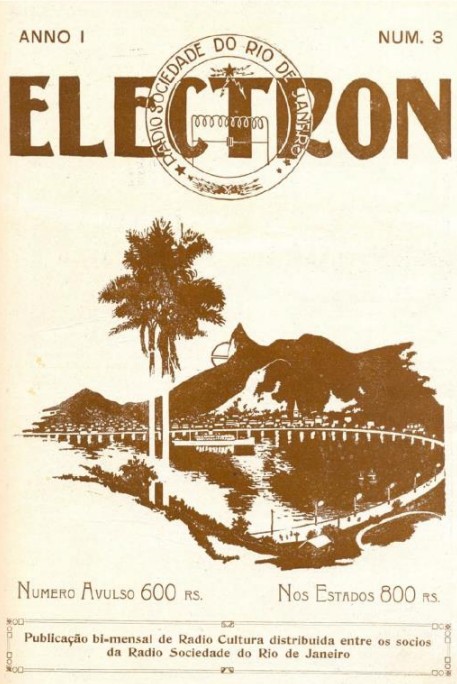
Radio Society functioned as a true cultural complex, with a library, reading room, technical laboratory, auditorium, orchestra, studios and editorial production. Two magazines were created: Rádio (1923), focused on the dissemination of science and themes related to broadcasting; and Electron (1926), a bimonthly publication of radio culture, distributed to members, with a circulation of 3,000 copies, bringing the complete programming of the station.
- Einstein, Marie Curie and Radio Society
In 1925, Albert Einstein visited Radio Society, after making a communication on ABC about the quanta of light. His speech was broadcast live, in German, with immediate translation into Portuguese:
“After my visit to this Radio Society, I cannot help but once again admire the splendid results that science has reached, combined with technique…”
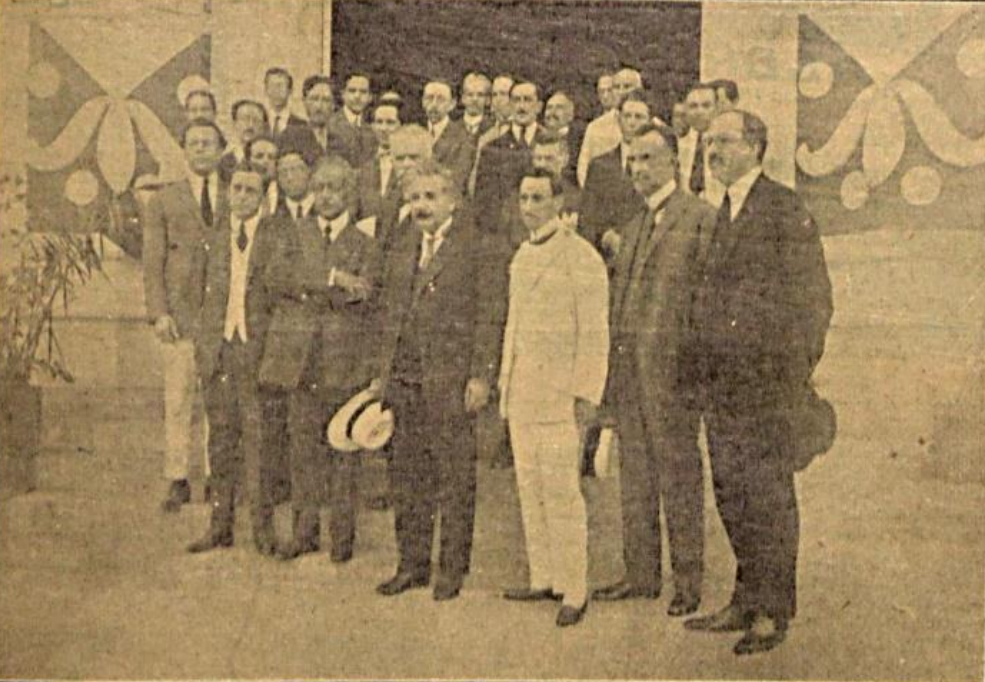
A newspaper of the time recorded that the Radio Society orchestra performed works by Francisco Braga, Alberto Nepomuceno, Ernesto Nazareth and Belmácio Godinho for Einstein, and the choro Mulatinho was particularly applauded by the scientist.
In 1926, it was the turn of Marie Curie, whose lectures on radioactivity at the Polytechnic School were broadcast, in French, by Radio Society.
- Early childhood education on the radio: the “Children’s Quarter of an Hour”
In 1924, the educator João Köpke proposed to Roquette-Pinto a program dedicated to children: the “Children’s Quarter of an Hour”. Started with Köpke himself, as “Grandpa”, the program was hugely successful.
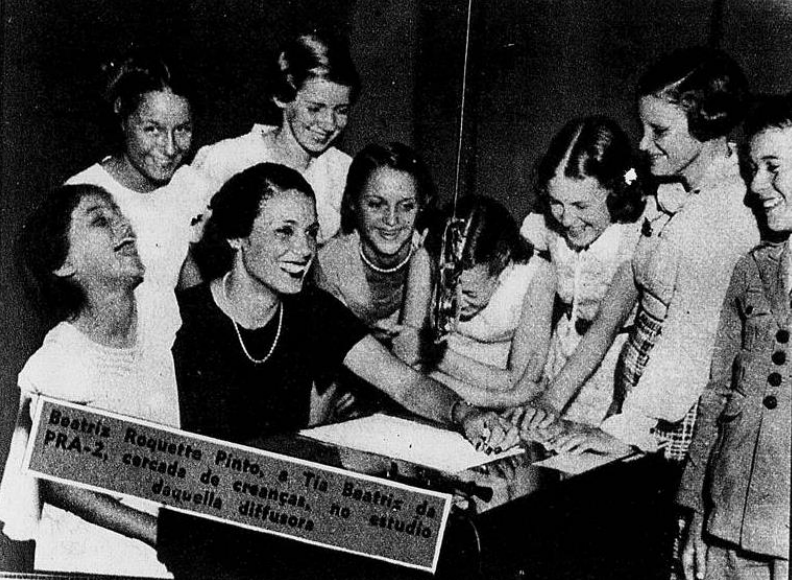
After his death, he was led by “Aunt Joanna” (Heloisa Alberto Torres) and, from 1930, by “Aunt Beatriz”, Beatriz Roquette-Pinto, daughter of the founder, then 19 years old. The program also answered questions sent by the children, many of them of a scientific nature.
- The donation to the State and the birth of Radio MEC
The expansion of commercial radios and the technical requirements of the new legislation of the 1930s made it unfeasible to maintain Rádio Sociedade in its non-commercial structure. In 1936, Roquette-Pinto carefully articulated the incorporation of RS into the federal government, with the mediation of Minister Gustavo Capanema and Carlos Drummond de Andrade, his chief of staff.
Getúlio Vargas assured that the station’s original objectives would be preserved. Radio Society was then donated to the State, linked to the Ministry of Education and Health, changing its name to Radio Ministry of Education, today Radio MEC, which, despite recent difficult times, needs and should survive.
- “Radiotelephony will be the greatest school of the future”
We close this story — a fundamental part of the history of science, education and culture in Brazil — with the words of Roquette-Pinto himself:
“Radiotelephony will be the greatest school of the future.”
“Radio is the newspaper of those who cannot read; he is the teacher of those who cannot go to school…”
“What a way to transform a man in a few minutes, if you employ him willingly, with heart and soul!”Radio Society was the real product of an altruistic dream of scientists, focused on Brazilian education, culture and science. For his main mentor, dreaming was essential — and acting, indispensable. Thus was born Radio Society of Rio de Janeiro, later Radio MEC.
Check out a rare testimony from Roquette-Pinto about the creation of Radio Society:
*Research and original text by Academic Ildeu de Castro Moreira
ARTICLES ABOUT ROQUETE PINTO AND RADIO IN BRAZIL